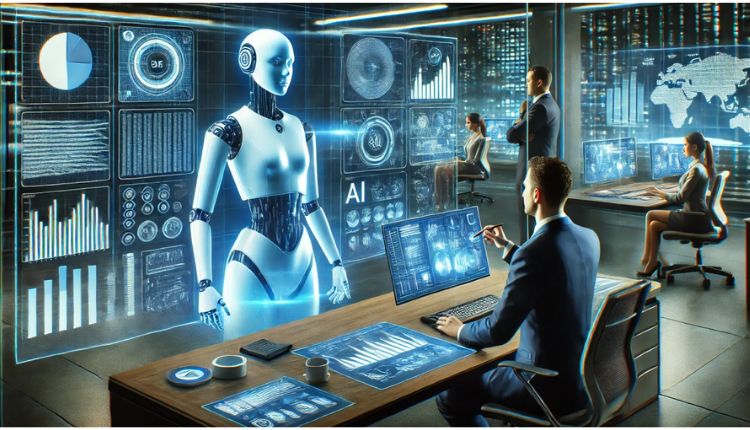
In recent years, demand for project management professionals has increased and is expected to remain strong for the next few years. It is the correct time to invest in project management courses. If you are just starting your career in this field, investing in CAPM certification training can be the best option for your career growth. Now, AI is gradually entering the field of project management. AI can streamline project management workflows for resource allocation, task prioritization, and communication, letting you focus on more critical activities. Project managers expect AI adoption to rise from 23% to 37% over the next 3 years. Now is the time to outsource some of your job to an AI assistant to organize, evaluate, and make decisions.
In this blog, we will explore how AI empowers risk management, adjusts to project dynamics, and seamlessly integrates communication through AI-driven solutions in project management.
How is AI Integrated into Project Management?
As a project leader, you must improve procedures, innovation, and results. AI’s advanced capabilities can improve project and team management efficiency, transparency, and productivity. Let’s recognize how AI works in project management:
Resource Allocation:
AI helps project managers in resource allocation by evaluating project needs and team members’ skills. This AI approach reduces delays by assigning the right people to the right tasks. In addition, it helps project managers identify the need to hire skilled professionals for a specific job. AI analyzes job descriptions, recruiting statistics, and industry trends. This technique simplifies recruitment and ensures a right fit between candidates and job needs. AI-driven task-expertise matching eliminates inefficiencies in resource allocation. The process ensures customers are happier, response times are faster, and staff productivity is higher.
Risk Prediction and Mitigation:
AI is helping project managers predict risks and issues that might arise in their projects. AI programs can analyze past data, current trends, and external factors to identify potential risks, estimate their likelihood, and measure the severity of each if they occurred. This means that project managers can proactively reduce risks and keep them from derailing the project.
Automated Task Management:
Artificial intelligence (AI) is rapidly transforming project management, compelling innovation, and enhancing the efficiency and effectiveness of project execution. AI is automating many routine tasks, enabling project managers to focus on more strategic, value-adding activities. Automated tasks through AI help in scheduling tasks, resource allocation, risk assessment, and tracking progress. It also analyzes data and makes intelligent decisions, reducing the time and effort required for these tasks. AI’s ability to intelligently analyze task attributes enables it to prioritize projects based on deadlines, dependencies, and resource availability. This automated project planning and prioritization boosts team efficiency and ensures key tasks are addressed. Project managers can now allocate resources more accurately using AI, improving workflows and deliverables.
Prompt Decision-Making:
AI data crunching provides project managers with predictive insights that improve decision-making. AI analyzes patterns and project data to detect risks and offer mitigation solutions. Strategic planning with educated choices lets you prevent problems from escalating. AI can analyze internal and external datasets to provide project insights that humans may miss. This helps discover negative risks and understand complex risk relationships. Reviewing past data and current patterns forecasts future hazards and their impact. Organizations can deploy resources and execute mitigation solutions proactively.
AI can model the occurrence and outcomes of risks, helping organizations understand their likelihood and impact. AI analyzes factors and calculates risk scores, speeding up decision-making. AI predicts market volatility and financial risks in financial services by analysing market movements, economic data, and global events.
Improved Communication and Collaboration:
AI is making it easier for project stakeholders to communicate and collaborate. AI-powered tools can help with translation, summarization, and real-time conversation, breaking down language barriers and making it easier for people from different backgrounds to work together. This can help people better understand the job, reduce misunderstandings, and make communication easier. AI is letting project managers have more unique experiences. This customization can boost output, make users happier, and improve how project management tools work for each user.
Closing Thoughts
AI solutions can improve adaptability, inventiveness, and efficiency in daily tasks and workflows. Optimizing resource allocation, increasing collaboration, and enabling precise data-driven decisions are part of this change. Many AI-powered project management tools integrate with your workflow to improve your project management skills. Different project management software allows project managers to create, prioritize, and assign tasks immediately. Its simple visual interface allows tracking team progress and staying focused on project goals.